
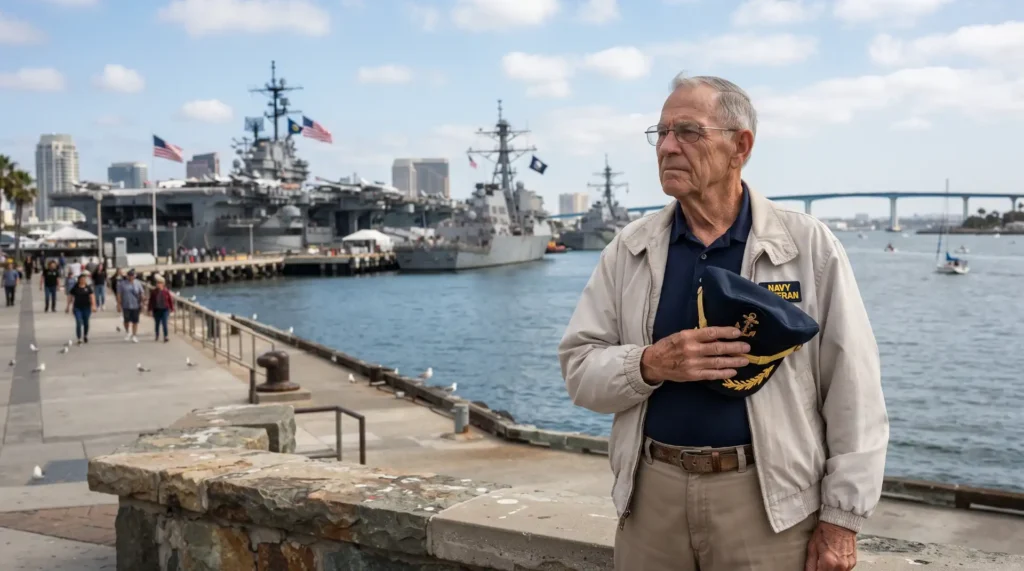
Thousands of Navy veterans proudly served their country aboard ships, submarines, aircraft carriers, and naval facilities without realizing they were regularly working around asbestos-containing materials. Decades later, many former service members receive a devastating diagnosis of mesothelioma, a rare cancer caused almost exclusively by asbestos exposure. Because San Diego has long been home to one of the nation’s largest concentrations of naval bases and military shipyards, many local veterans and their families wonder whether they still have legal options after leaving military service.
The answer is often yes—but the process is more nuanced than many people expect. Although federal law generally prevents active-duty service members from suing the U.S. government for service-related injuries, veterans diagnosed with mesothelioma may still have legal claims against the private companies that manufactured, supplied, or distributed asbestos-containing products used by the military.
Understanding your legal rights is an important first step toward seeking compensation for medical expenses, lost income, reduced quality of life, and other damages resulting from asbestos-related illnesses.
Why Navy Veterans Face a Higher Risk of Mesothelioma
For much of the twentieth century, asbestos was considered an essential material for military vessels because it resisted heat, corrosion, and fire. Navy ships contained asbestos throughout numerous systems, including engine rooms, pipe insulation, turbines, pumps, valves, boilers, electrical components, flooring materials, adhesives, and gaskets.
Veterans serving aboard destroyers, aircraft carriers, cruisers, submarines, amphibious ships, and support vessels often worked in confined spaces where asbestos fibers could become airborne during maintenance, repairs, or overhauls.
Although not every sailor directly handled insulation or mechanical equipment, asbestos dust frequently traveled through ventilation systems and enclosed compartments. As a result, many veterans experienced repeated exposure simply by living and working aboard these vessels.
San Diego’s naval presence—including Naval Base San Diego, Naval Base Point Loma, Naval Air Station North Island, and nearby ship repair facilities—means countless veterans stationed in Southern California may have encountered asbestos during their military careers.

Mesothelioma Often Develops Decades After Military Service
One of the most difficult aspects of mesothelioma is its exceptionally long latency period.
Symptoms often do not appear until 20 to 50 years after asbestos exposure occurred. Many Navy veterans retired decades ago before experiencing persistent chest pain, shortness of breath, coughing, fatigue, or unexplained weight loss.
Because these symptoms resemble more common illnesses, diagnosis is sometimes delayed until the disease has progressed.
This lengthy latency period explains why many veterans diagnosed today were exposed during military service in the 1960s, 1970s, 1980s, or even earlier.
Receiving a diagnosis years after discharge does not necessarily prevent someone from pursuing legal compensation.
Can Veterans Sue the U.S. Navy?
This is one of the most common questions asked after a mesothelioma diagnosis.
Generally, veterans cannot sue the federal government or the U.S. Navy for asbestos exposure that occurred during active military service. Federal law significantly limits lawsuits against the government for injuries connected to military duties.
However, that does not mean legal options disappear.
Many successful mesothelioma lawsuits have been filed against private manufacturers that supplied asbestos-containing products used aboard Navy ships and military installations.
These companies designed, manufactured, marketed, or distributed products containing asbestos despite evidence that prolonged exposure posed serious health risks.
Instead of filing claims against the military itself, veterans often pursue compensation from these private companies.
Who May Be Responsible for Asbestos Exposure?
Liability varies depending on where and how exposure occurred.
Potential defendants may include manufacturers of:
- Pipe insulation
- Boilers
- Pumps
- Valves
- Gaskets
- Packing materials
- Cement products
- Electrical insulation
- Fireproofing materials
- Industrial coatings
- Shipbuilding components
Many companies that produced these products have faced asbestos litigation for decades. Some entered bankruptcy and established asbestos trust funds specifically to compensate future victims.
Others remain active businesses that continue defending asbestos lawsuits in court.
Determining which manufacturers supplied products aboard a particular Navy vessel often requires extensive investigation involving military records, ship maintenance histories, employment records, expert witnesses, and historical product databases.
Can Veterans File Claims Against Asbestos Trust Funds?
Yes.
Many asbestos manufacturers established trust funds after bankruptcy proceedings required them to compensate future victims.
These trusts collectively contain billions of dollars designated for eligible individuals diagnosed with asbestos-related diseases.
Depending on your work history and documented exposure, you may qualify for compensation from one or multiple asbestos trust funds.
Unlike traditional lawsuits, trust fund claims generally do not require a courtroom trial. Instead, they rely on documentation proving exposure, diagnosis, and work history.
Many Navy veterans qualify for both trust fund claims and lawsuits against companies that remain financially responsible.
VA Benefits and Civil Lawsuits Are Different
Some veterans mistakenly believe receiving Veterans Affairs (VA) disability benefits prevents them from filing a lawsuit.
That is generally not true.
VA disability compensation provides benefits to eligible veterans whose illnesses are connected to military service.
Civil lawsuits, on the other hand, seek compensation from private companies responsible for manufacturing or supplying asbestos-containing products.
These legal remedies serve different purposes and may often proceed independently.
Veterans should discuss their individual circumstances with qualified legal counsel to understand how different forms of compensation may interact.
The U.S. Department of Veterans Affairs provides information about disability compensation for asbestos-related illnesses at:
What Compensation May Be Available?
Every case differs based on the evidence, diagnosis, responsible companies, and individual losses.
Compensation may include recovery for:
Medical treatment expenses can become overwhelming, particularly when surgery, chemotherapy, immunotherapy, radiation therapy, prescription medications, travel for specialized care, and long-term monitoring are required.
Many veterans also experience lost earning capacity if they retire earlier than expected or can no longer perform consulting, contracting, or part-time work.
California law may also allow recovery for physical pain, emotional suffering, diminished quality of life, and the financial impact mesothelioma has on spouses and families, depending on the circumstances of the claim.
If a veteran dies from mesothelioma, surviving family members may have legal rights through a wrongful death claim.
The value of every case depends on its unique facts, available evidence, and applicable law. No attorney can ethically guarantee a specific settlement or verdict.

Evidence That Can Strengthen a Mesothelioma Claim
Strong documentation often plays a significant role in establishing where exposure occurred and identifying responsible companies.
Helpful evidence may include military service records identifying duty stations, ships, occupational specialties, and periods of service. Medical records confirming a mesothelioma diagnosis are equally important, as are pathology reports, imaging studies, and treatment documentation.
Employment records after military service may also help distinguish military asbestos exposure from later civilian occupational exposure. Statements from former shipmates, maintenance personnel, or coworkers can provide valuable testimony regarding the presence of asbestos-containing materials aboard specific vessels.
Attorneys may also work with naval historians, industrial hygienists, and medical experts to reconstruct exposure histories spanning several decades.
California Filing Deadlines Matter
California law limits the amount of time individuals generally have to file asbestos-related personal injury and wrongful death claims.
Because these deadlines depend on many factors—including when the illness was discovered, when it reasonably should have been discovered, and the facts surrounding each case—waiting too long could jeopardize valuable legal rights.
Veterans diagnosed with mesothelioma should seek legal guidance as soon as practical after learning of their diagnosis rather than assuming they have unlimited time.

How Attorneys Investigate Navy Mesothelioma Cases
Mesothelioma litigation differs from ordinary personal injury claims because exposure often occurred decades before symptoms developed.
Attorneys handling these cases frequently conduct extensive historical investigations. They review naval records, identify manufacturers that supplied equipment aboard particular ships, locate technical manuals, examine procurement documents, and analyze maintenance schedules from military archives.
Many firms also maintain proprietary databases identifying asbestos-containing products historically used aboard thousands of Navy vessels.
This investigative work can help identify every potentially responsible company instead of focusing on only one manufacturer.
Why San Diego Veterans Should Seek Experienced Legal Guidance
San Diego has one of the nation’s largest populations of active-duty military personnel and veterans. Local attorneys familiar with asbestos litigation understand the unique issues surrounding naval service, military records, federal benefits, California civil procedure, and asbestos trust fund claims.
Because mesothelioma cases often involve multiple defendants and decades-old evidence, experience with occupational asbestos litigation can significantly improve the efficiency of the investigation.
An attorney can also coordinate medical documentation, preserve testimony, communicate with responsible companies, and negotiate with insurers or defendants while allowing veterans to focus on treatment and family.
Protecting Your Family’s Future
A mesothelioma diagnosis affects far more than physical health. Families frequently experience financial uncertainty, emotional stress, and questions about future medical care.
Legal action cannot reverse an illness caused by asbestos exposure, but it may provide financial resources that help pay for treatment, replace lost income, and create greater financial stability for loved ones.
Veterans who faithfully served their country should understand all available legal options before making decisions about compensation.
Even if exposure occurred decades ago, California law may still provide a path to pursue claims against the companies responsible for placing asbestos-containing products aboard Navy vessels.
Conclusion
Many Navy veterans stationed in San Diego spent years serving aboard ships and at military facilities where asbestos exposure was common. Although they generally cannot sue the federal government for service-related exposure, they may have the right to pursue compensation from private manufacturers that produced or supplied asbestos-containing materials used by the military. Depending on the circumstances, veterans may also qualify for asbestos trust fund compensation and VA disability benefits.
Because mesothelioma cases involve complex medical evidence, historical product identification, and California filing deadlines, obtaining experienced legal guidance as soon as possible after diagnosis can help preserve important rights. Every case is unique, and an individualized evaluation is essential to determine the legal options that may be available.