
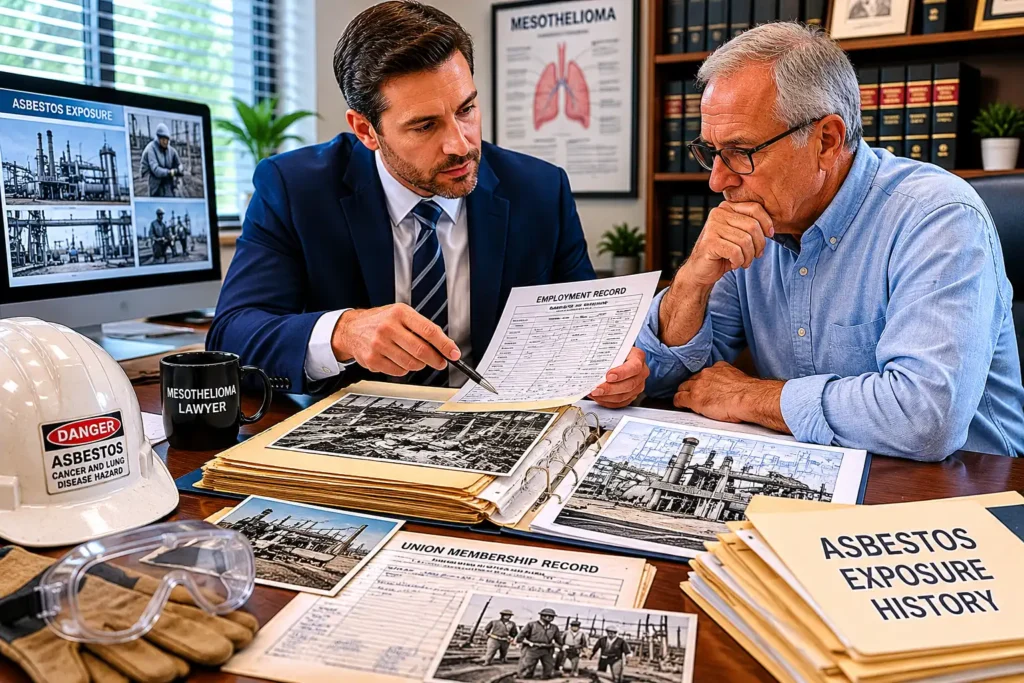
A mesothelioma claim may still be possible even if the company responsible for asbestos exposure no longer exists. Many asbestos manufacturers, suppliers, and employers closed, filed for bankruptcy, merged with other companies, or changed ownership decades ago. Despite these changes, legal options may still be available through asbestos trust funds, successor companies, insurance policies, and claims against other responsible parties connected to the exposure.
Why Many Companies Linked To Asbestos Exposure No Longer Exist
Mesothelioma is unlike most other diseases because it often develops decades after exposure to asbestos. Many individuals diagnosed today were exposed in the 1960s, 1970s, or 1980s. During that time, asbestos was widely used in construction materials, industrial equipment, shipbuilding, manufacturing facilities, refineries, power plants, and military installations throughout the United States.
As evidence of asbestos-related illnesses became more widely known, lawsuits against manufacturers and suppliers increased significantly. Some companies faced thousands of claims from workers, veterans, contractors, and consumers who developed mesothelioma or other asbestos-related diseases.
The financial impact of these lawsuits forced many businesses to close, reorganize, or seek bankruptcy protection. Others merged into larger corporations or sold portions of their operations. As a result, people diagnosed with mesothelioma today often discover that the company they remember working for no longer exists under the same name.
This situation can create uncertainty for families who are trying to understand whether a claim is still possible. Fortunately, a company’s closure does not necessarily prevent legal action.
 A Closed Company Does Not Always Mean A Claim Is Impossible
One of the biggest misconceptions surrounding mesothelioma claims is that a case automatically ends if the company responsible has gone out of business.
In reality, asbestos litigation frequently involves exposure that occurred many years before diagnosis. Courts and lawmakers recognized this challenge long ago because mesothelioma has one of the longest latency periods of any occupational disease. As a result, several legal mechanisms were created to address situations where companies disappeared before future victims became sick.
Many asbestos claims today involve entities that technically no longer exist. The legal process often focuses on identifying what happened to the company, whether it established a trust fund, whether another company assumed responsibility, and whether additional parties contributed to the exposure.
Because asbestos exposure commonly occurred at multiple locations over many years, a claim may involve several responsible companies rather than just one former employer.
How Asbestos Trust Funds Help Victims Today
One of the most significant developments in asbestos litigation was the creation of asbestos bankruptcy trust funds.
When many asbestos companies filed for bankruptcy, courts required them to establish trust funds to compensate future victims. These trusts were designed to protect the rights of people who had not yet been diagnosed but might develop asbestos-related diseases years later.
Today, asbestos trust funds contain billions of dollars reserved for qualified claimants. These funds continue to process claims even though the original companies may have ceased operations decades ago.
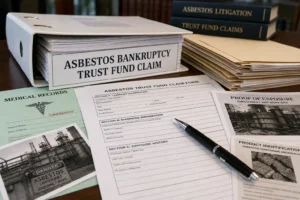
Trust fund claims differ from traditional lawsuits because they are handled through administrative procedures rather than courtroom litigation. Individuals generally submit documentation showing a mesothelioma diagnosis and evidence connecting their exposure to products or operations associated with the trust.
The trust then evaluates the claim according to established criteria and determines whether compensation is available. While every trust operates differently, these funds remain one of the most common sources of recovery for mesothelioma patients and their families.
The U.S. Government Accountability Office provides information regarding asbestos bankruptcy trusts and their role in compensating victims: https://www.gao.gov
What Happens When A Company Changes Names Or Merges?
Not every asbestos company disappeared completely. Some merged with larger corporations, changed names, sold assets, or underwent multiple reorganizations over time.
A worker may remember being employed by one company while the legal responsibility for asbestos claims now belongs to an entirely different organization. Determining these connections often requires a detailed review of corporate records and historical business transactions.
For example, a manufacturer that produced asbestos-containing products in the 1970s may have been acquired by another corporation in the 1990s. Depending on the terms of the acquisition, the new company may have inherited certain liabilities connected to asbestos claims.
Corporate histories can become complicated when multiple mergers and acquisitions occur over several decades. However, tracing these relationships is a common part of mesothelioma litigation and may reveal additional sources of compensation.
 Understanding Successor Liability
Successor liability is a legal concept that may apply when one company takes over another company’s responsibilities.
Although laws vary by jurisdiction, courts sometimes determine that a successor company remains responsible for asbestos-related liabilities associated with the previous business. This can occur when a merger effectively continues the original operation or when liabilities were transferred as part of a business acquisition.
Successor liability cases often require extensive investigation because the details of each corporate transaction matter. Attorneys may review historical filings, purchase agreements, regulatory documents, and business records to determine whether a successor company may be connected to the exposure.
For mesothelioma patients, these investigations can uncover opportunities that are not immediately obvious. A company that appears to have disappeared may still have a legally responsible successor operating today.
Why Exposure History Is So Important
Mesothelioma claims are heavily dependent on exposure evidence. Since the disease usually develops many years after asbestos exposure, establishing a clear exposure history is often one of the most important aspects of a claim.
A person’s work history frequently serves as the starting point. Construction workers, electricians, plumbers, mechanics, shipyard workers, refinery employees, military veterans, and industrial workers often encountered asbestos products from multiple manufacturers throughout their careers.
Investigators may review employment records, Social Security earnings histories, union records, military service records, and job site documentation to reconstruct a timeline of exposure.
In many cases, exposure occurred at several locations and involved products manufactured by numerous companies. Identifying each potential source helps create a more complete picture of the circumstances surrounding the diagnosis.
How Mesothelioma Attorneys Identify Responsible Companies
One of the unique aspects of mesothelioma litigation is the extensive historical research involved.
Attorneys often rely on large databases containing information about asbestos products, manufacturers, industrial facilities, construction projects, and military installations. These resources help connect a person’s work history with known asbestos exposure sites.
A worker may not remember every product used on a job site forty years ago. However, records from previous lawsuits, product catalogs, construction documents, and witness testimony can help identify the materials that were present.
Legal teams may also interview former coworkers, supervisors, and family members to gather additional information about workplace conditions and exposure sources.
This investigative process often reveals companies that the individual did not initially realize were connected to their exposure.
Other Parties May Still Be Responsible
Even when an employer no longer exists, other companies may still bear responsibility for asbestos exposure.
Many mesothelioma cases involve manufacturers that supplied asbestos-containing materials to a workplace. Others involve distributors, contractors, premises owners, or equipment suppliers.
For example, a worker at a refinery may have been exposed to insulation, gaskets, valves, pumps, and industrial equipment manufactured by several different companies. If one company no longer exists, others may still be operating or have established trust funds.
Because asbestos exposure often occurred through multiple products and locations, a comprehensive investigation is essential to identifying all potentially responsible parties.
 What Families Should Know About Wrongful Death Claims
Mesothelioma claims are not limited to living patients. Families may also have legal rights after losing a loved one to mesothelioma.
Wrongful death claims generally allow certain surviving family members to pursue damages related to the loss. These claims can involve many of the same companies, trust funds, and exposure sources that would have been available to the individual during their lifetime.
The availability of wrongful death claims depends on state law and the specific circumstances involved. Filing deadlines may also differ from those that apply to personal injury claims.
Because mesothelioma often progresses rapidly after diagnosis, families frequently begin gathering information regarding exposure history and potential claims soon after a diagnosis is confirmed.
Statutes Of Limitations Still Matter
Although asbestos exposure may have occurred decades ago, legal deadlines still apply.
Most states recognize the unique nature of mesothelioma by starting the statute of limitations when the disease is discovered rather than when the exposure occurred. This legal principle acknowledges that victims could not have reasonably known about their illness at the time of exposure.
However, waiting too long after diagnosis may affect available legal options. Deadlines vary across jurisdictions, making it important to understand the rules that apply to a particular case.
Families pursuing wrongful death claims should also be aware that separate filing deadlines may apply following a loved one’s death.
Compensation May Still Be Available
The fact that a company no longer exists does not automatically eliminate the possibility of compensation. Asbestos trust funds, successor corporations, insurance policies, product manufacturers, contractors, and other responsible entities may still provide avenues for financial recovery.
Each mesothelioma case involves a unique exposure history, and identifying every potential source of compensation often requires detailed investigation. Because exposure frequently occurred across multiple jobs, products, and locations, there may be more options available than initially expected.
Conclusion
A mesothelioma diagnosis can raise difficult questions, especially when the company responsible for asbestos exposure appears to have disappeared. Fortunately, the legal system has developed several mechanisms to address this exact situation.
Companies may close, merge, reorganize, or enter bankruptcy, but that does not necessarily prevent a mesothelioma claim. Asbestos trust funds, successor companies, insurance coverage, and other responsible parties may continue to provide paths toward financial recovery.
Understanding what happened to the company connected to the exposure is often the first step. A thorough investigation into work history, product exposure, and corporate records may uncover compensation sources that remain available today, even decades after the original exposure occurred.