
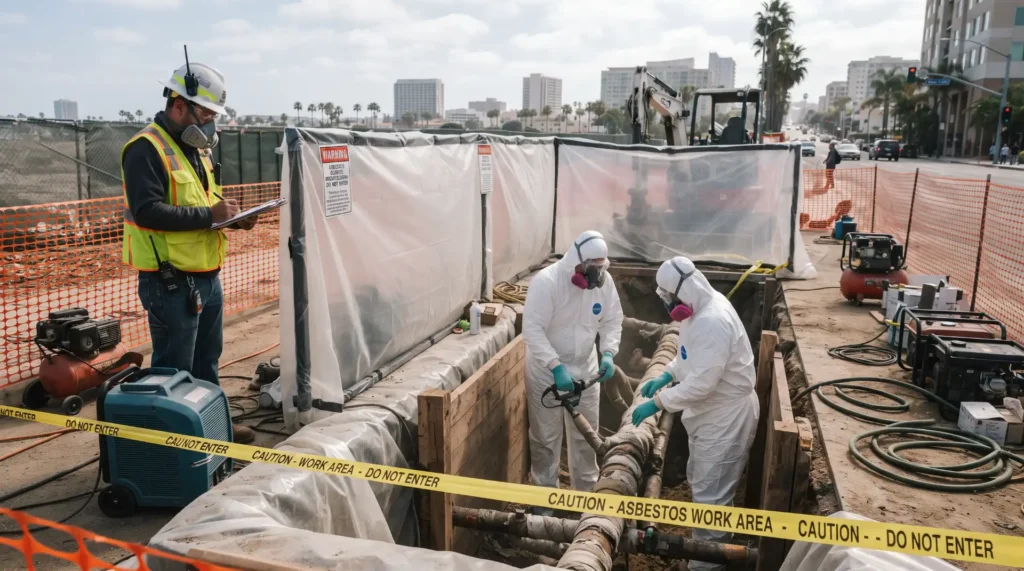
Asbestos exposure remains an important workplace safety concern in San Diego and throughout California, particularly when employees work around older buildings, infrastructure, construction materials, insulation, roofing products, flooring, utility systems, and other materials that may contain asbestos. Although asbestos use has declined substantially over the decades, asbestos-containing materials remain present in many older structures and infrastructure systems. The danger can become more significant when those materials are cut, drilled, sanded, broken, removed, demolished, or otherwise disturbed.
For San Diego workers, understanding California’s asbestos safety requirements can be important because workplace rules establish responsibilities for employers, building owners, contractors, supervisors, and employees. Cal/OSHA regulates occupational asbestos exposure through different provisions depending on the type of work being performed. Construction-related asbestos work is generally governed by California Code of Regulations, Title 8, Section 1529, while asbestos exposure in general industry is addressed under Section 5208.
These rules cover more than traditional asbestos removal projects. California’s construction asbestos standard applies to activities including demolition, salvage, removal, encapsulation, construction, alteration, repair, maintenance, renovation, transportation, disposal, housekeeping activities, and certain excavation work where asbestos exposure may occur.
For employees who develop serious illnesses after occupational asbestos exposure, the distinction between a workplace safety issue and a potential legal claim can become important. Mesothelioma and other asbestos-related diseases often develop many years after exposure, which can make it difficult for an individual to identify exactly when, where, and how the exposure occurred. Workplace records, training information, exposure monitoring, employment history, and evidence concerning asbestos-containing materials may therefore become significant when investigating an asbestos-related illness.
Why Workplace Asbestos Exposure Still Matters in San Diego
San Diego has a large and diverse built environment that includes older residential properties, commercial buildings, industrial facilities, schools, military-related facilities, utilities, and infrastructure. Construction, renovation, demolition, maintenance, and utility work can potentially disturb asbestos-containing materials that have remained in place for decades.
Asbestos does not necessarily create the same level of exposure risk simply because it exists inside a building or structure. The condition of the material and the type of work being performed can make an important difference. Certain asbestos-containing materials may remain relatively stable when intact, while cutting, sanding, drilling, breaking, or aggressive removal can release airborne fibers.
California’s asbestos regulations specifically recognize that materials such as asbestos-cement pipe can emit airborne fibers when they are cut, sawed, or broken. Cal/OSHA also identifies certain older materials as requiring special consideration when determining whether asbestos may be present.
This is particularly relevant to maintenance and utility employees. A worker may not think of repairing a pipe, replacing flooring, maintaining a mechanical system, or renovating an older building as an “asbestos job.” However, the regulatory requirements can apply when those activities may disturb asbestos-containing materials.
For this reason, asbestos safety is not limited to specialized asbestos-abatement companies. Depending on the work being performed, construction workers, maintenance employees, utility workers, demolition crews, electricians, plumbers, HVAC workers, custodial employees, and other workers may encounter asbestos-containing materials.
What Cal/OSHA Regulates
California has specific occupational safety regulations addressing asbestos exposure. Construction work involving asbestos is primarily covered by Title 8, Section 1529. General-industry occupational asbestos exposure is generally covered by Section 5208, while certain shipbuilding, ship repair, and shipbreaking activities are addressed under other provisions.
Section 1529 is particularly important for construction and renovation work because its scope is broad. It applies to demolition or salvage where asbestos is present, removal or encapsulation of asbestos-containing materials, construction and renovation involving asbestos-containing materials, asbestos spill cleanup, and other activities where workers may encounter asbestos.
The regulation also recognizes different classifications of asbestos work. Class I work generally involves removal of thermal system insulation or certain surfacing asbestos materials. Class II work involves removal of other asbestos-containing materials, such as certain wallboard, floor tile, roofing, siding, and construction mastics. Class III work involves repair and maintenance operations where asbestos-containing materials are likely to be disturbed, while Class IV work includes certain maintenance and custodial activities involving contact with asbestos-containing materials without disturbing them.
The classification matters because different types of work can trigger different requirements for exposure assessment, engineering controls, respiratory protection, protective clothing, decontamination, training, and supervision.
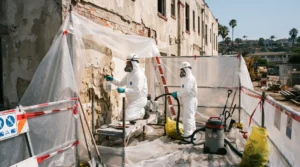 Employers Must Assess Potential Asbestos Exposure
One of the important concepts under California’s asbestos construction standard is the exposure assessment. Before covered work begins, the employer must ensure that a competent person conducts an exposure assessment to determine expected employee exposure during the operation.
The purpose is not simply to determine whether asbestos exists somewhere at a worksite. The assessment is intended to help determine the potential level of employee exposure and whether the planned controls are appropriate for the work being performed.
A competent person under the regulation must have the ability to identify asbestos hazards and select an appropriate control strategy, along with the authority to take prompt corrective action. Additional training requirements apply depending on the classification of asbestos work involved.
This requirement can be especially significant on renovation and demolition projects. If workers begin disturbing materials without adequately evaluating whether asbestos is present, employees may face unnecessary exposure. A proper assessment allows employers to identify hazards and establish controls before workers begin activities that could release fibers.
For someone later investigating an occupational asbestos exposure, records concerning workplace assessments can also provide useful information about the conditions that existed at a particular jobsite.
Identification of Asbestos-Containing Materials
California’s regulations place important information responsibilities on building and facility owners and employers. Under Section 1529, building and facility owners have duties concerning the identification and communication of asbestos-containing materials and presumed asbestos-containing materials before covered work begins.
This requirement recognizes a practical problem in construction: workers may not be able to determine simply by looking at a material whether it contains asbestos.
Older insulation, flooring, roofing products, pipe materials, sprayed materials, and other building components may require appropriate evaluation. Some materials are presumed to contain asbestos under circumstances established by the regulation unless the applicable requirements for determining otherwise are satisfied.
This information should be communicated to people who may encounter the materials during their work. On a multi-employer construction site, this can be especially important because multiple contractors may operate in the same area.
A worker employed by one company may therefore encounter asbestos materials that were installed or managed by a building owner, general contractor, subcontractor, or another party. California’s asbestos rules include specific communication requirements intended to address these situations.
Wet Methods and HEPA Controls
Cal/OSHA requires employers to use engineering controls and work practices designed to minimize asbestos exposure. Section 1529 specifically requires wet methods or wetting agents for asbestos handling, mixing, removal, cutting, application, and cleanup unless an applicable exception applies.
HEPA-filtered vacuum equipment is also an important part of asbestos control. The regulation requires HEPA-equipped vacuum cleaners for collecting asbestos-containing debris and dust, subject to specified exceptions.
These requirements reflect the basic principle that preventing asbestos fibers from becoming airborne is preferable to relying solely on personal protective equipment after exposure has already occurred.
The regulation also restricts certain practices. Dry sweeping of asbestos-containing dust and debris is prohibited, as is the use of compressed air to remove asbestos unless it is used within an enclosed ventilation system designed to capture the resulting dust cloud. Certain high-speed abrasive equipment also cannot be used unless required protective controls are in place.
For employees, these requirements provide an important indication of what properly controlled asbestos work should look like. An operation involving visible dust, uncontrolled cutting, dry sweeping, or inadequate containment may warrant closer safety attention.
Respiratory Protection Is Part of a Larger Safety Program
Respirators can be an important component of asbestos protection, but California’s requirements do not treat respiratory protection as the only method of controlling exposure. Engineering controls and work practices are required, with respiratory protection used under specified circumstances.
Depending on the work and exposure circumstances, employers may be required to provide appropriate respirators, protective clothing, and other personal protective equipment.
Proper respirator use involves more than handing an employee a mask. Respiratory protection requirements can involve selection, fit, training, medical evaluation, use procedures, maintenance, and other safeguards.
For certain asbestos work, protective clothing may include coveralls, head coverings, gloves, and foot coverings. The applicable requirements depend on the type of work and exposure conditions.
Employees should not assume that ordinary construction dust masks provide adequate protection against asbestos. The type of respiratory protection required depends on the applicable regulation and the exposure conditions involved.
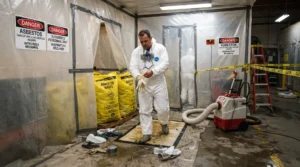 Decontamination and Hygiene Requirements
Preventing asbestos exposure does not stop when the cutting, removal, or maintenance activity ends. Contaminated clothing, equipment, surfaces, and debris can create additional exposure risks if they are not properly handled.
California’s asbestos construction standard establishes hygiene and decontamination requirements for covered operations. Certain Class I activities require a decontamination area consisting of an equipment room, shower area, and clean room arranged in a specified sequence.
Other covered operations can require designated equipment or decontamination areas and procedures for cleaning protective equipment and preventing contamination from spreading beyond the regulated work area.
These requirements are particularly relevant because asbestos fibers can potentially travel away from the original work area on contaminated clothing or equipment. Proper decontamination procedures are therefore part of controlling exposure for both workers and other people who may enter the area.
This issue can also matter to families of workers. Historically, asbestos exposure has sometimes occurred when workers inadvertently brought contaminated dust or fibers home on clothing or other items. California’s workplace rules address contamination control as part of the broader effort to reduce occupational exposure.
Training Is a Major Cal/OSHA Requirement
Training is another central component of asbestos safety. Employees must receive information appropriate to the asbestos work they perform, including information about health hazards and safe work practices. The regulation includes specific training requirements for different categories of asbestos work.
Workers need to understand what asbestos is, where it may be found, how work activities can disturb it, and what procedures are required to minimize exposure.
Training can also cover respiratory protection, protective clothing, engineering controls, hygiene practices, decontamination, emergency procedures, waste disposal, and other aspects of asbestos work. Cal/OSHA’s information resources explain that employers have additional duties concerning asbestos hazard communication and employee information.
For Class I and Class II asbestos work, the competent person must receive appropriate comprehensive training concerning asbestos identification, handling, removal, abatement, and the requirements of the standard. Different training requirements apply to competent persons performing Class III and Class IV work.
A worker who believes they were exposed to asbestos without appropriate training may want to preserve information about what training was provided, what warnings were given, and what safety procedures were actually used.
Medical Surveillance May Apply
Cal/OSHA’s asbestos regulations also include medical surveillance requirements for certain workers whose exposure meets specified criteria. Under Section 1529, medical examinations may be required for employees who are assigned to areas where asbestos exposure may meet or exceed the applicable permissible exposure level for the required period or who perform qualifying Class I, II, or III work for the specified duration.
Medical surveillance requirements are designed to monitor workers who have qualifying occupational exposure. They are part of the broader workplace safety system and should not be confused with treatment for an asbestos-related disease.
Asbestos-related diseases can have long latency periods. A worker exposed decades ago may not experience symptoms until many years later. This long delay can make historical employment records and medical information particularly important when evaluating an asbestos-related illness.
If a person is diagnosed with mesothelioma after a long work history involving construction, shipyards, utilities, industrial facilities, renovation, demolition, or maintenance, the person’s entire occupational history may need to be considered rather than focusing only on the most recent job.
Asbestos Cement Pipe and San Diego Infrastructure
Asbestos-cement pipe deserves particular attention when discussing San Diego workplace exposure. Older asbestos-cement products can remain part of infrastructure systems, and cutting or breaking them can release fibers.
Cal/OSHA materials specifically recognize that asbestos-cement pipe or sheet can emit airborne asbestos fibers when cut, sawed, or broken.
The City of San Diego’s construction specifications have also included requirements concerning asbestos-cement pipe work, including worker training, work plans, disposal procedures, and compliance with applicable California asbestos regulations.
For utility workers, contractors, and other employees working around older infrastructure, this demonstrates why asbestos awareness cannot be limited to buildings. Pipes and other infrastructure components can also contain asbestos.
A worker who encounters an older pipe should not assume that it is safe to cut, drill, break, or remove simply because it does not resemble traditional insulation. Proper identification and handling procedures are important.
Demolition and Renovation Can Create Exposure Risks
Renovation and demolition work can create particularly challenging asbestos safety conditions because workers may disturb multiple layers of materials within an older structure.
A project may involve removing walls, flooring, roofing, insulation, pipe coverings, adhesives, ceiling materials, or other components. Some materials may not be visually identifiable as asbestos-containing without appropriate evaluation.
California’s Section 1529 expressly covers demolition, salvage, renovation, repair, maintenance, and alteration work involving asbestos.
Before work begins, building owners and employers have information and notification responsibilities concerning asbestos-containing and presumed asbestos-containing materials.
For San Diego workers, this means asbestos safety should be considered during ordinary renovation projects, not only during specialized asbestos-removal operations.
Workers who are unexpectedly told to disturb suspect materials may have questions about whether the material has been properly identified and whether the required controls are in place. Those concerns can be important from both workplace-safety and legal perspectives.
What Happens When Safety Controls Are Not Followed?
Failure to follow asbestos safety requirements can expose workers to preventable hazards. Examples can include inadequate exposure assessment, insufficient training, improper containment, failure to use required wet methods, improper cleanup, inadequate respiratory protection, or failure to communicate known asbestos hazards.
Not every violation will necessarily result in an asbestos-related illness, and the presence of a regulatory violation alone does not establish legal liability for a particular disease. However, workplace safety records can become important evidence when investigating how exposure occurred.
Cal/OSHA’s asbestos information program explains that the agency can investigate asbestos-related concerns and may take administrative action in circumstances involving noncompliance.
Workers who believe unsafe asbestos practices occurred may therefore want to preserve information about the employer, jobsite, dates of employment, supervisors, coworkers, materials handled, work activities, training, protective equipment, and any available workplace records.
The Difference Between Cal/OSHA Rules and a Mesothelioma Claim
Cal/OSHA regulations establish workplace safety requirements. A mesothelioma lawsuit is a separate legal matter that can involve questions about exposure, causation, responsible parties, damages, and applicable California law.
This distinction is important because an employer’s compliance with workplace regulations does not automatically determine whether a person has or does not have a potential legal claim. Likewise, an alleged safety violation does not automatically establish liability for mesothelioma.
Mesothelioma cases can involve exposure occurring many years before diagnosis. Depending on the circumstances, potentially relevant parties can include employers, property owners, contractors, manufacturers, suppliers, or other entities associated with asbestos-containing products or worksites.
Because California asbestos litigation can involve complicated factual and legal questions, people diagnosed with mesothelioma should consider obtaining advice from a qualified California attorney who can evaluate the specific circumstances of the exposure.
This article provides general educational information and is not a substitute for individualized legal advice.
Keeping Records After Suspected Workplace Exposure
Workers who believe they experienced significant occupational asbestos exposure may benefit from keeping detailed records of their work history. The goal is to preserve information that could become difficult to reconstruct years later.
Employment dates, job titles, work locations, employers, contractors, supervisors, coworkers, job duties, materials handled, renovation projects, demolition work, utility projects, and locations where asbestos-containing materials may have been present can all be relevant.
Workers may also want to preserve copies of available training certificates, safety communications, workplace notices, photographs, pay records, employment documents, union records where applicable, and medical records.
Coworker information can also become valuable. A person who worked alongside someone decades ago may remember the materials used or work practices followed even when the original jobsite has changed substantially.
The long latency associated with asbestos-related diseases makes this type of historical information particularly important. The longer the period between exposure and diagnosis, the more difficult it may become to reconstruct workplace conditions from memory alone.
What San Diego Workers Should Understand About Asbestos Safety
The central principle of California asbestos regulation is exposure prevention. Employers must evaluate asbestos hazards, use appropriate engineering controls and work practices, provide required training and protective measures, and communicate relevant hazard information to employees.
The precise requirements depend on the type of work being performed. A worker cleaning a building where intact asbestos-containing material remains undisturbed may be subject to different requirements than a worker removing asbestos insulation or cutting asbestos-cement pipe.
California’s rules distinguish between different categories of asbestos work because the potential for fiber release can vary significantly depending on the activity.
For San Diego employees, understanding these distinctions can help workers recognize why certain jobs require specialized procedures.
It is also important to remember that asbestos exposure may occur in places that do not look like traditional asbestos-abatement sites. Older buildings, utility systems, renovation projects, demolition sites, industrial facilities, and infrastructure work can all present different exposure scenarios.
Where to Find California’s Official Asbestos Requirements
Workers, employers, contractors, and property owners should rely on official regulatory sources when researching current asbestos requirements.
The California Department of Industrial Relations maintains the official text of Title 8, Section 1529, covering asbestos in construction. The regulation contains detailed requirements concerning exposure assessment, engineering controls, work practices, respiratory protection, protective clothing, hygiene, communication, training, medical surveillance, and competent-person responsibilities.
California Department of Industrial Relations — Title 8, Section 1529: Asbestos
For general-industry asbestos exposure, California also maintains Title 8, Section 5208, which applies to occupational asbestos exposure outside the construction activities covered by Section 1529, subject to the regulation’s stated exceptions.
California Department of Industrial Relations — Title 8, Section 5208: Asbestos
Cal/OSHA also provides an asbestos information resource explaining notification, information, and related regulatory requirements.
These official resources are useful because asbestos regulations can be detailed, and the applicable requirements may depend on the exact type of work and exposure circumstances.
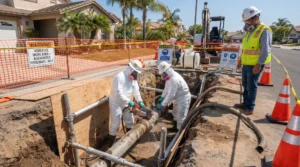 When Workplace Asbestos Exposure Leads to a Mesothelioma Diagnosis
A mesothelioma diagnosis can raise questions about where the exposure occurred and who may be legally responsible. For someone who spent years working in construction, maintenance, utilities, manufacturing, shipyards, demolition, renovation, or other industries where asbestos may have been present, occupational exposure can be an important part of the investigation.
However, determining the source of exposure is often complicated.
A person may have worked at numerous jobsites and encountered different asbestos-containing products over several decades. Different employers and contractors may have been involved in the same project. Building materials may have been manufactured by companies that no longer exist under the same corporate structure.
This is why an asbestos exposure investigation often requires a detailed occupational history rather than simply identifying the person’s most recent employer.
For San Diego residents and workers, local employment history can also intersect with California’s broader industrial, military, construction, transportation, utility, and commercial development history. Each person’s exposure circumstances are different and should be evaluated individually.
Understanding Your Rights After Occupational Exposure
Workers diagnosed with an asbestos-related disease may have questions about workers’ compensation, third-party claims, product liability, personal injury claims, or other potential legal remedies. The availability of a particular claim depends on the facts and applicable law.
The first step is generally understanding the exposure history.
Where did the person work? What materials did they handle? Were asbestos-containing products identified? Were workers trained? Were protective equipment and appropriate controls provided? Were materials cut, sanded, drilled, demolished, or removed? Were there contractors or other companies working nearby? Were safety warnings provided?
Answers to these questions can help establish the factual history surrounding exposure.
A qualified attorney can then evaluate which legal claims may be available and what deadlines or other legal requirements may apply. Because asbestos claims can involve specialized statutes and long latency periods, obtaining case-specific legal advice can be particularly important.
Final Thoughts on San Diego Asbestos Workplace Safety
Asbestos exposure remains a workplace safety issue even though many asbestos-containing products are no longer commonly installed. Older buildings and infrastructure can continue to contain asbestos materials, and construction, demolition, renovation, maintenance, and utility work can disturb those materials.
California has detailed requirements designed to reduce occupational asbestos exposure. Section 1529 governs covered construction activities and establishes requirements for exposure assessments, engineering controls, wet methods, HEPA equipment, respiratory protection, protective clothing, hygiene, training, communication, and competent-person supervision.
The regulations also recognize that asbestos hazards can occur in different forms. Asbestos-cement pipe, for example, can release fibers when cut, sawed, or broken, making appropriate controls important during infrastructure work.
For San Diego workers, awareness is an important part of prevention. Employees should understand the materials they may encounter, the hazards associated with disturbing asbestos, and the safety procedures that apply to their particular work.
For someone who has already developed mesothelioma or another asbestos-related disease, the issue becomes more than workplace safety. Understanding the person’s historical exposure may help determine what happened, where the exposure occurred, and whether there may be potential legal remedies.
Because every asbestos exposure and mesothelioma case is different, workers and families should preserve employment and medical information and seek qualified legal guidance when evaluating their individual circumstances.